
Why Gutters Pull Away From Your House And What To Do
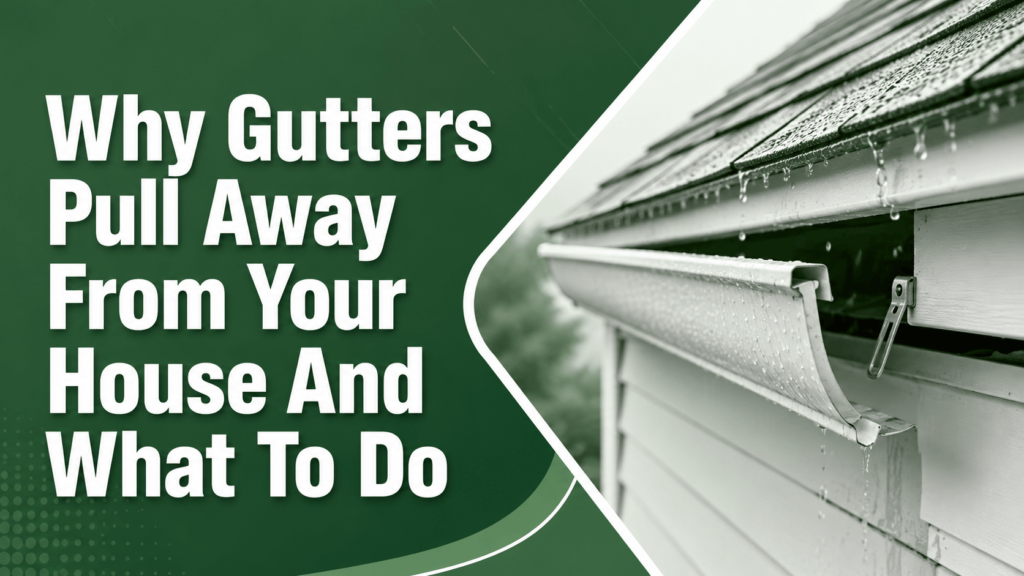
Rain gutters are easy to ignore until they start sagging, bending, or separating from the roofline. Once a gutter pulls away from the house, water no longer moves where it should. It can run behind the gutter, soak the fascia, spill near the foundation, or leave stains down the siding.
Loose gutters are more than a cosmetic issue. They usually point to stress somewhere in the system. That stress may come from clogged gutters, old fasteners, heavy water, poor slope, damaged fascia, ice buildup, or an installation problem that has slowly gotten worse.
The sooner you notice the signs, the easier it is to protect the home from water damage.
What It Means When Gutters Pull Away From The House
A gutter that pulls away has lost a secure connection to the fascia board or roof edge. You may notice a visible gap behind the gutter, sections that hang lower than others, or water dripping between the gutter and the home during rain.
Sometimes the problem starts in one small area. A few loose hangers can allow one section to sag. Once that section fills with water, the added weight pulls even harder on the rest of the gutter line.
If the problem continues, the gutter may bend, twist, leak, or separate further from the house.
Common Reasons Gutters Pull Away
Loose Or Failing Gutter Fasteners
Fasteners hold the gutter to the home. Older systems often use spikes and ferrules, while many newer systems use hidden hangers. As fasteners age, they can loosen from the fascia.
Heavy rain, wind, snow, ice, and years of weight from debris can strain the hardware. Once a fastener loses its grip, the gutter begins to lean forward.
A small gap may not seem urgent at first, but loose fasteners can spread stress across the whole gutter run.
Heavy Debris In The Gutters
Leaves, pine needles, roof grit, seed pods, and small branches can collect inside the gutter. When that debris becomes wet, it gets much heavier.
A clogged gutter can also trap water instead of sending it toward the downspout. That weight can strain the hangers, bend the gutter, and pull the system away from the house.
Routine rain gutter cleaning helps reduce this extra weight and keeps water moving through the system as intended.
Standing Water From Poor Slope
Gutters need a slight pitch so water can travel toward the downspouts. If the slope is wrong, water can sit in low spots.
Standing water adds constant pressure. During colder months, trapped water can freeze and expand, making the stress worse. A gutter that looks full long after rain has stopped may have a slope issue, a clog, or both.
Damaged Fascia Boards
The fascia board is the long board behind the gutter. If it is rotted, soft, split, or water-damaged, fasteners may no longer hold securely.
Fascia damage often comes from roof edge leaks, long-term overflow, missing drip edge, poor drainage, or old paint and caulk failure. When the board weakens, even a properly installed gutter can start to separate.
Ice, Snow, And Seasonal Weight
In colder areas, snow and ice can place a heavy load on gutters. Ice-filled gutters, frozen downspouts, and roof snow sliding into the gutter can bend metal and loosen hangers.
This seasonal stress is especially hard on gutters that already have clogs, weak fasteners, or old fascia.
Incorrect Installation
Gutters need the right hanger spacing, pitch, size, and secure attachment. If hangers are spaced too far apart, the gutter may sag between supports. If the gutter is not pitched correctly, water may collect and add weight.
A system can also fail early if it was installed into damaged fascia or attached with hardware that was not strong enough for local weather conditions. Professional rain gutter installation helps make sure the system is sized, pitched, and secured correctly from the start.
Warning Signs To Watch For
Loose gutters can show signs before a full section separates. Look for:
- Gaps between the gutter and fascia
- Gutters leaning forward
- Water dripping behind the gutter
- Sagging sections along the roofline
- Screws, spikes, or hangers pulling loose
- Peeling paint on fascia or siding
- Soil erosion below the gutter
- Water pooling near the foundation
- Streaks or staining under the roof edge
- Sections that overflow during moderate rain
These signs often appear during or after storms. Walk around the home once the rain stops and check the gutter line from the ground. A slight sag, stain, or drip pattern can tell you where the system is struggling.
Quick Gutter Problem Guide
| What You Notice | Possible Cause | What It Can Lead To |
| Gutter Pulling Forward | Loose hangers or weak fasteners | Overflow, sagging, fascia damage |
| Water Behind The Gutter | Gap, poor flashing, or bad slope | Rotten fascia, siding stains |
| One Low Section | Debris weight or hanger failure | Standing water, metal bending |
| Overflow Near Downspout | Clog or undersized drainage | Soil erosion, foundation moisture |
| Soft Fascia | Long-term water exposure | Gutter detachment, trim repairs |
Can Loose Gutters Be Repaired?
Many loose gutter problems can be repaired if the gutter is still in good shape and the fascia is solid. A repair may involve tightening or replacing hangers, adjusting the slope, sealing minor leaks, clearing clogs, or securing a loose section.
If the fascia is damaged, the wood may need repair before the gutter can be reattached. Attaching a gutter to soft or rotted wood usually leads to the same problem again.
A professional rain gutter repair service can help determine if the issue is limited to one section or connected to a larger drainage problem.
When Replacement Makes More Sense
Replacement may be the better path if the gutter is bent, cracked, undersized, badly rusted, or pulling away in several areas.
Replacement may also make sense when:
- The gutters overflow often
- The system is old and worn
- Multiple sections sag or leak
- Fascia repairs are already needed
- Downspouts are poorly placed
- Water is draining too close to the home
- The home needs larger gutters for roof size or storm volume
A new system can correct old pitch issues, improve water flow, and reduce repeated service calls. If several areas are failing at once, rain gutter replacement may be the most practical long-term solution.
How Homeowners Can Help Prevent Sagging Gutters
Prevention starts with keeping the system clear and watching how it performs during rain. A gutter that drains well has less weight sitting inside it.
Helpful maintenance steps include:
- Clean gutters on a regular schedule
- Remove heavy roof debris near the gutter line
- Check downspouts for clogs
- Watch for overflow during storms
- Look for loose hangers after winter
- Keep water draining away from the home
- Schedule an inspection after major wind, ice, or storm events
You do not need to inspect every inch of the system after each storm, but it helps to look for obvious changes. A gutter that suddenly leans, drips, or overflows is sending a clear signal.
Get Loose Gutters Checked Before More Damage Starts
A gutter pulling away from the house is a clear sign that something needs attention. The issue may be simple, such as loose hangers or heavy debris. It may also point to damaged fascia, poor slope, ice stress, or an aging gutter system.
When gutters pull away, water often finds the path behind the system. That can soak the fascia, run down siding, damage landscaping, and collect near the foundation.
A careful inspection can show what is causing the separation and what repair makes the most sense. Fixing the problem early can help protect the roof edge, siding, foundation, and the rest of the gutter system.